
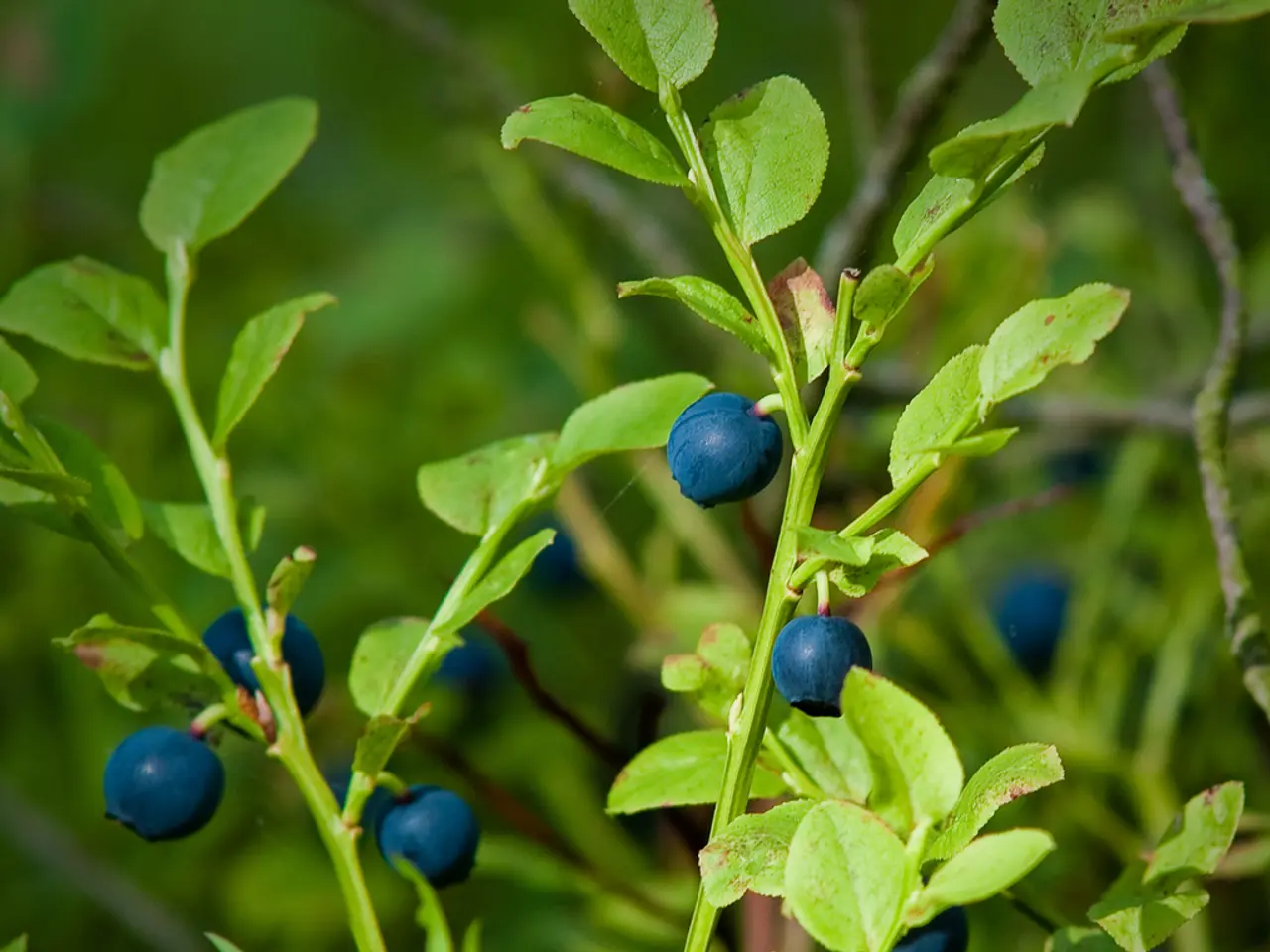
Identifying Plants Reminiscent of Elderberry: A Question of Safety and Potential Toxicity
In the lush landscapes of summer, foragers may encounter berries that resemble elderberries, but are they truly edible? This article aims to shed light on the key differences between elderberries and their look-alike plants, ensuring a safe and enjoyable foraging experience.
Elderberries, belonging to the genus Sambucus, are easily recognisable by their opposite, pinnately compound leaves with toothed leaflets. The stems of elderberry plants contain a spongy pith, a characteristic that sets them apart from other toxic look-alikes. Clusters of many small, yellowish-white saucer-shaped flowers adorn the elderberry bush, followed by small, round to oval berries, usually blue-black or black, growing in dense clusters.
However, several plants share a striking resemblance to elderberries. Some look-alikes may have alternate leaf arrangements, hollow stems, and differ in berry cluster structure, size, and berry color. For instance, pokeweed berries are typically larger and dark purple-black, while pokeberries have reddish-purple stems and egg-shaped leaves that produce a foul smell when crushed.
It's crucial to be aware that many look-alikes are highly toxic, making correct identification essential. For example, deadly nightshade shrubs grow dark purple-black berries that resemble elderberries, but they are highly toxic and can quickly kill humans.
Other plants, such as blackcurrant bushes and black huckleberry, may produce elderberry flower look-alikes, but their fruits are safe to eat, albeit sometimes too acidic. Deerberries, also known as highbush huckleberry, are attractive to deer and various birds and animals, but humans find them too bitter and sour.
For those considering foraging for elderberries, it's advisable to do so carefully or by experienced individuals due to these similarities and toxicity risks. Pokeweed, for instance, is extremely toxic to humans and pets, although it's used for coloring in several industries.
For those seeking gardening advice, Glen, a gardening expert with over 15 years of experience, offers helpful content on a variety of topics, including garden fungicides, candy cane peppers, and watermelon.
In summary, safe identification hinges on closely examining leaf arrangement (opposite vs. alternate), stem pith texture (spongy vs. hollow), flower cluster shape, and berry characteristics, along with awareness that some look-alikes are poisonous. With this knowledge, foragers can confidently distinguish elderberries from their look-alikes and enjoy the fruits of their labour.
- To ensure a safe foraging experience, it's important to recognize the distinct features of elderberries in home-and-garden settings, such as their opposite, pinnately compound leaves with toothed leaflets and the spongy pith in their stems.
- For garden enthusiasts, seeking guidance from experienced individuals like Glen, who offers expert advice on various gardening topics, can help in the successful cultivation of desirable plants like elderberries.