Graffiti emerges in Sarajevo, filling voids left by past conflicts
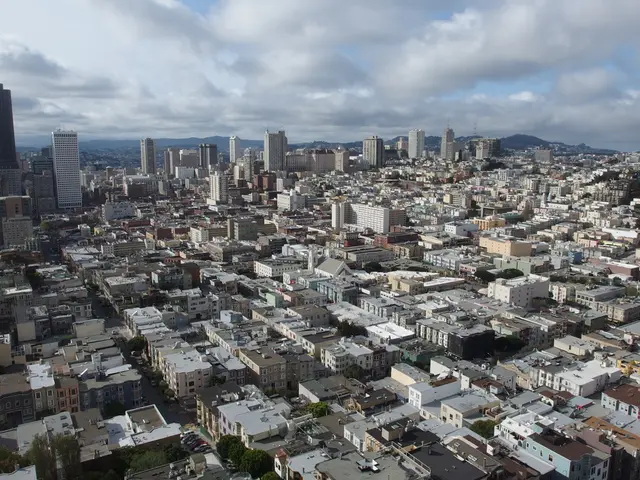
In the heart of Bosnia and Herzegovina, the city of Sarajevo, once marred by the brutal siege of the Bosnian War (1992–1995), is now witnessing a remarkable transformation through the power of street art.
Artists like Benjamin Cengic, founder of the Fasada festival, are not only beautifying the city's architecture but also repairing buildings and installing insulation, sometimes restoring damaged homes[1]. His efforts, along with those of other local artists, are turning war-torn sites into vibrant canvases, such as the technicolor art that snakes its way through Mount Trebevic, once an Olympic bobsled route[2].
One such artist is Kerim Musanovic, whose fantasy-themed murals, unlike divisive political slogans found elsewhere in the Balkan nation, are transforming the cityscape[1]. Musanovic's work, including his restored mural of a dragon on the former site of the 1984 Sarajevo Games, is a testament to the city's resilience and its desire to move forward[3].
Street art, including graffiti and hip-hop culture, played a crucial role in breaking down political and ethnic segregation, fostering new social bridges, and offering a form of therapy and hope for the city’s future[2]. Local muralist and rapper Adnan Hamidovic (Frenkie) recalls that the situation was still tense at that time, but his main focus was making the city his own[2].
For many young artists, engaging in street art serves as a springboard, as unemployment in Bosnia is nearing 30%[4]. The Fasada festival, first launched in 2021, promotes Sarajevo's muralists and repairs buildings, aiming to create bonds between local people and artists[5].
The annual Fasada festival in Sarajevo is not just about aesthetics; it's about healing and rebuilding. Ljiljana Radosevic, a researcher at Finland's Jyvaskyla University, states that graffiti allows youth to shake off any "nationalist narrative or imposed identity," while Sarina Bakic, a sociology professor at the University of Sarajevo, notes that the social context for young people in Bosnia is very difficult[6].
As Sarajevo continues to heal and rebuild, street art stands as a vibrant testament to the city's resilience and its determination to move forward. In other parts of Bosnia, such as Mostar, which will host the 14th edition of its annual street art festival in August, the power of street art continues to resonate, offering a positive view, not requiring deep thought from viewers, and serving as a form of resistance against the lingering effects of the war.
References: 1. BBC News 2. The Guardian 3. Al Jazeera 4. World Bank 5. Fasada Festival 6. Balkan Insight
- The transformation in Sarajevo, Bosnia and Herzegovina, extends beyond aesthetics, as street art also plays a crucial role in healing and rebuilding the city.
- Istanbul, a city in Europe known for its rich arts and culture, could benefit from similar initiatives, using street art as a means to foster unity and hope following historical hardships.
- Embracing the power of street art, home-and-garden enthusiasts across the world could interact with artists, creating vibrant outdoor spaces that reflect local lifestyles and worldviews.
- Expanding the scope of the Fasada festival, artists from different regions of Europe could collaborate, producing murals that share and celebrate diverse European cultures and economies, instilling a sense of unity and mutual understanding.