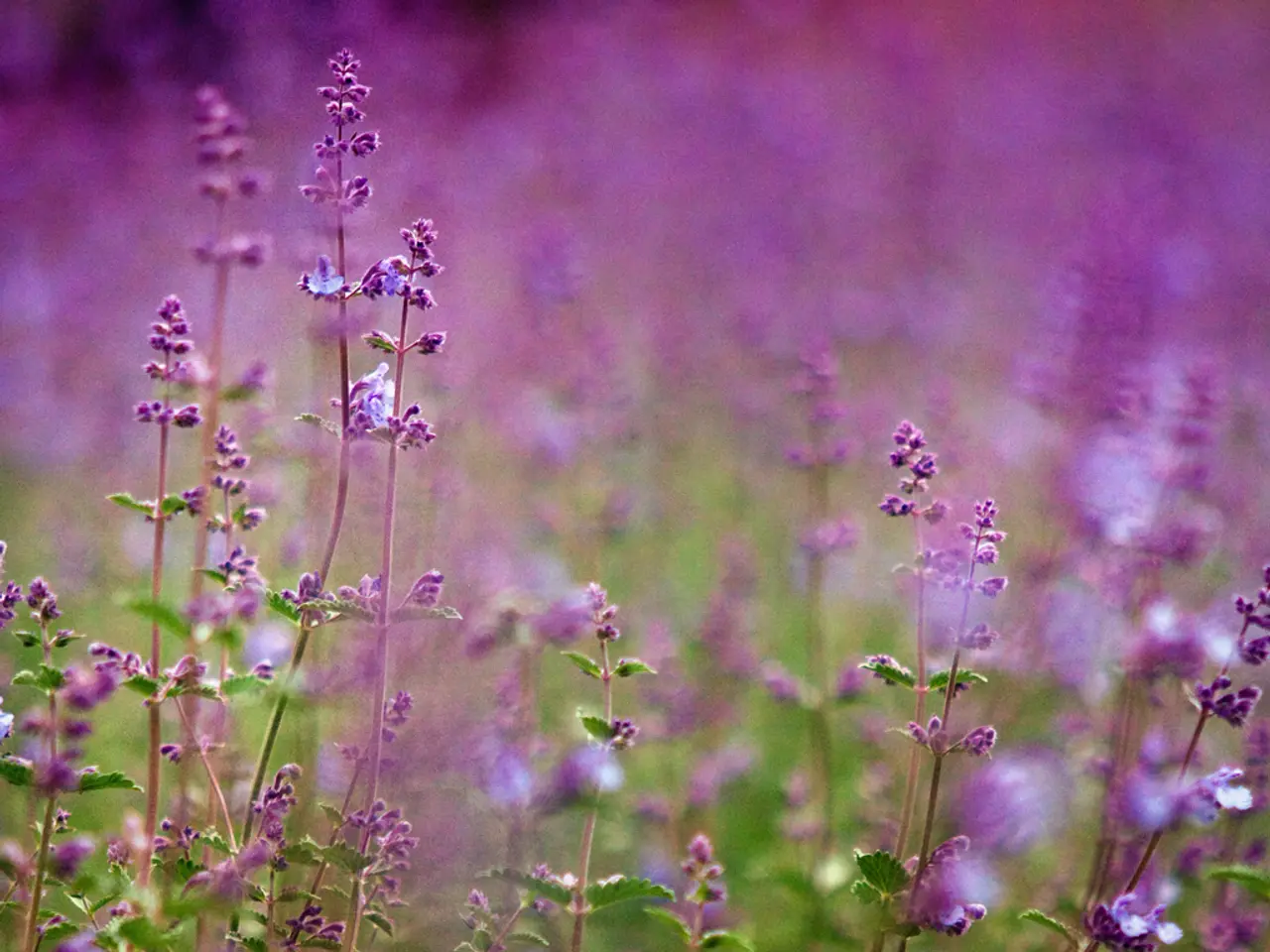
Exploring Russian Sage and Lavender: Choosing Between Vibrant Hues and Fragrant Aromas?
In the world of gardening, two plants stand out for their resilience and charm - Russian sage (Salvia yangii, formerly Perovskia atriplicifolia) and lavender. Both are popular choices for their unique characteristics and versatility, but which one is more suitable for low-maintenance, drought-resistant, and pollinator-friendly gardens in colder USDA zones 4 to 9?
Russian sage, a hardy perennial native to Central Asia, was discovered by Russian botanist Grigory S. Karelin in 1840. It is known for its deep root system, which allows it to thrive in drought conditions, and its tolerance for poor soils and slightly more moisture than lavender. Russian sage adds long-lasting color to borders and pollinator gardens, with its lacy blue flowers and silvery foliage providing a soft texture.
On the other hand, lavender, specifically English, French, and Spanish lavender varieties, is a true herb native to the Mediterranean. It is valued for its culinary and medicinal uses, and its dense blooms and strong floral aroma. Lavender prefers well-drained, drier soil and can be less forgiving in wetter or heavier soils often present in colder zones.
Here's a comparison of these two plants based on several criteria:
| Criteria | Russian Sage | Lavender | |-------------------------------|----------------------------------------|------------------------------------------| | **Hardiness in Cold Zones** | Hardy from zone 4 up to 9, tolerates colder climates with ease [3] | Hardy mainly in zones 5 through 9; more sensitive to dampness in cold [4] | | **Drought Resistance** | Very drought-tolerant, thrives in poor soils and can tolerate slightly more moisture too [2][3] | Fairly drought-tolerant once established but prefers well-drained, drier soil; water young plants carefully [4] | | **Maintenance** | Minimal once established, tolerates poor soil, needs little pruning [3] | Also low-maintenance but more sensitive to soil moisture and root rot; doesn't require fertilization [4] | | **Pollinator Friendly** | Attracts pollinators with airy, blue flowers and soft gray foliage as a backdrop to other pollinator plants [2][3] | Strong fragrance and flowers attract pollinators; used in perfumery and medicinally [1][3] | | **Growth Habit & Size** | Taller (up to 5 feet) and broader, with airy and wispy flower stems providing texture [1][3] | More compact and dense, usually under 3 feet, with a bushier shape [1] |
Additional notes: - Russian sage is more tolerant of poor soils and of slightly more moisture than lavender, making it a robust choice for colder and tougher garden conditions [3]. - Lavender varieties prefer more alkaline and very well-drained soil, and can be less forgiving in wetter or heavier soils often present in colder zones [4]. - Both plants love full sun but Russian sage tolerates a wider range of soil conditions and moisture levels [3].
In conclusion, if you're looking for a plant that requires less fuss, survives colder winters well, endures drought, and supports pollinators effectively, Russian sage is the better choice for USDA zones 4 to 9. Lavender is suitable too, especially in zones closer to 5-9, but it demands more careful soil management to avoid root issues in cold or wet conditions [1][3][4].
Technology can aid in the cultivation of Russian sage and lavender, providing information on optimal growth conditions, soil management, and care requirements in home-and-garden settings. Furthermore, climate-controlled greenhouses could potentially allow cultivation of these plants in USDA zones outside their natural range, expanding the lifestyle opportunities for gardeners.