
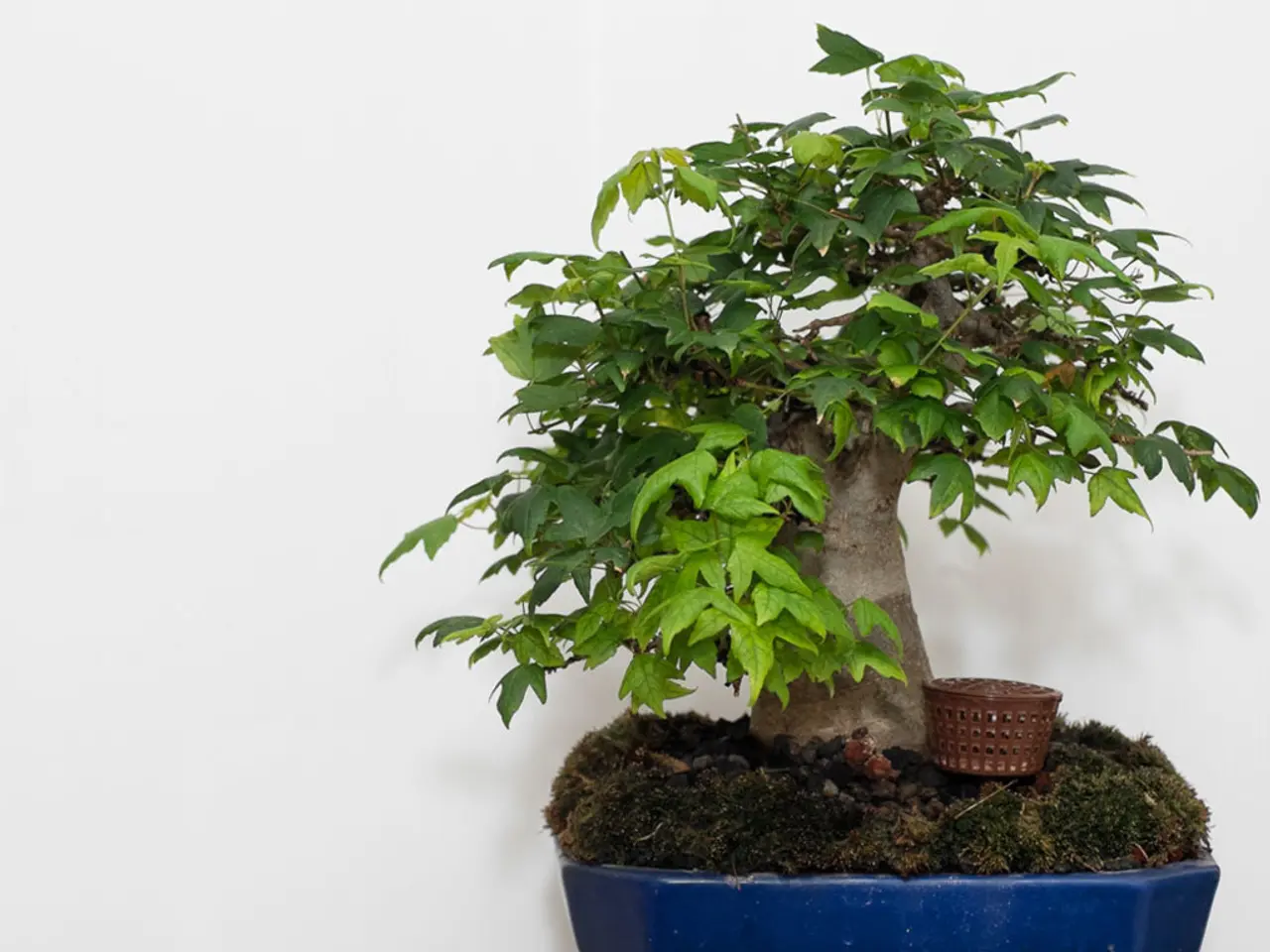
Exploration into the Art of Bonsai Sculpting for the Bonsai Enthusiast Newcomers
In the world of horticulture, bonsai has emerged as a captivating art form that allows almost any tree to be transformed into a miniature masterpiece. This ancient practice, originating over 2,300 years ago in China as an art form called pun-jai, has since found a home in Japanese culture, where Zen Buddhists adopted it as a meditative process.
The word "bonsai" means "planted in containers" in Japanese, and it's essential to choose the right container for your tree. The pot should be as tall as the tree's trunk is wide and 1⁄3 as wide as the tree is tall.
Bonsai trees can live both indoors and outdoors, depending on the species and climate. When keeping a bonsai tree indoors, it should be placed in a south-facing window, have access to humidity, and avoid excessive heat. Outdoor bonsai should be placed in a well-lit area, appropriate for the species' climate, and sheltered from wind and inclement weather.
A bonsai soil mix can include compost, red lava rock chips, pumice, Akadama, and other components to provide nutrients and stabilize the soil structure. It's important to use well-aerated soil that drains sufficiently and retains enough water to stay moist for bonsai growth. When watering a bonsai, ensure the entire root mass is wet and allow excess water to drain from the bottom of the pot.
Fertilization is crucial for a healthy tree, and different types of bonsai require different schedules. A good rule of thumb is to fertilize during the growing months (early spring through late summer). To sidestep developing a fertilization routine, some recommend feeding the tree every time you water with a urea-free bonsai fertilizer.
Trimming and pruning are essential for bonsai health and structure. Only trim and prune during the growing season, and never defoliate a branch you want to keep on your tree. Structural pruning involves trimming larger branches and keeping tips in mind: trim branches close to the ground, trim branches growing parallel with the trunk, trim branches that cross other branches, and trim branches that are too thick on top.
For beginners, it's best to start with species that are forgiving, easy to train, and resilient. Top recommendations include the Dwarf Jade (Portulacaria afra), Chinese Elm, Japanese Maple (Acer palmatum), Ficus, and Juniper. These species are favoured because they tolerate pruning, wiring, and general bonsai care without excessive difficulty, providing beginner growers with a satisfying learning curve while achieving good aesthetic results.
Growing a bonsai from a sapling can take up to five years, so patience is key. With the right tools, such as pruning shears, concave cutters, root rake, training wire, and a suitable container, you'll be well on your way to creating your own miniature masterpiece.
For more information on bonsai tree care, consider a bonsai masterclass book, browse frequently asked questions about bonsai trees, or join the conversation in the Facebook page group. Happy growing!
[1] Smith, J. (2020). Beginner's Guide to Bonsai: A Comprehensive Guide for the New Bonsai Enthusiast. London: Mango Publishing. [2] Johnson, K. (2018). The Art of Bonsai: A Beginner's Guide to Creating and Caring for Your Own Miniature Tree. New York: Sterling Publishing. [3] Tanaka, T. (2016). Bonsai for Beginners: A Complete Guide to Caring for Your Miniature Tree. Tokyo: Tuttle Publishing. [4] Lee, S. (2019). The Bonsai Bible: The Definitive Guide to Creating, Collecting, and Enjoying Bonsai. New York: Sterling Publishing. [5] Kim, J. (2017). The Complete Book of Bonsai: A Step-by-Step Guide for the Complete Beginner. London: DK Publishing.
- Nurturing the health of a bonsai tree depends not only on choosing the right pot but also on appropriate care resources, such as understanding the bonsai soil mix, watering techniques, and fertilization schedules.
- Whether you prefer indoor bonsai or outdoor bonsai, placement is crucial; indoor bonsai require a south-facing window, humidity, and temperature control, while outdoor bonsai need a well-lit area suitable for the specific climate and protection from wind and inclement weather.
- For a successful start in bonsai cultivation, beginners should opt for forgiving species like the Dwarf Jade, Chinese Elm, Japanese Maple, Ficus, and Juniper. These species, known for their ability to tolerate pruning, wiring, and general care, offer a satisfying learning curve and good aesthetic results.