
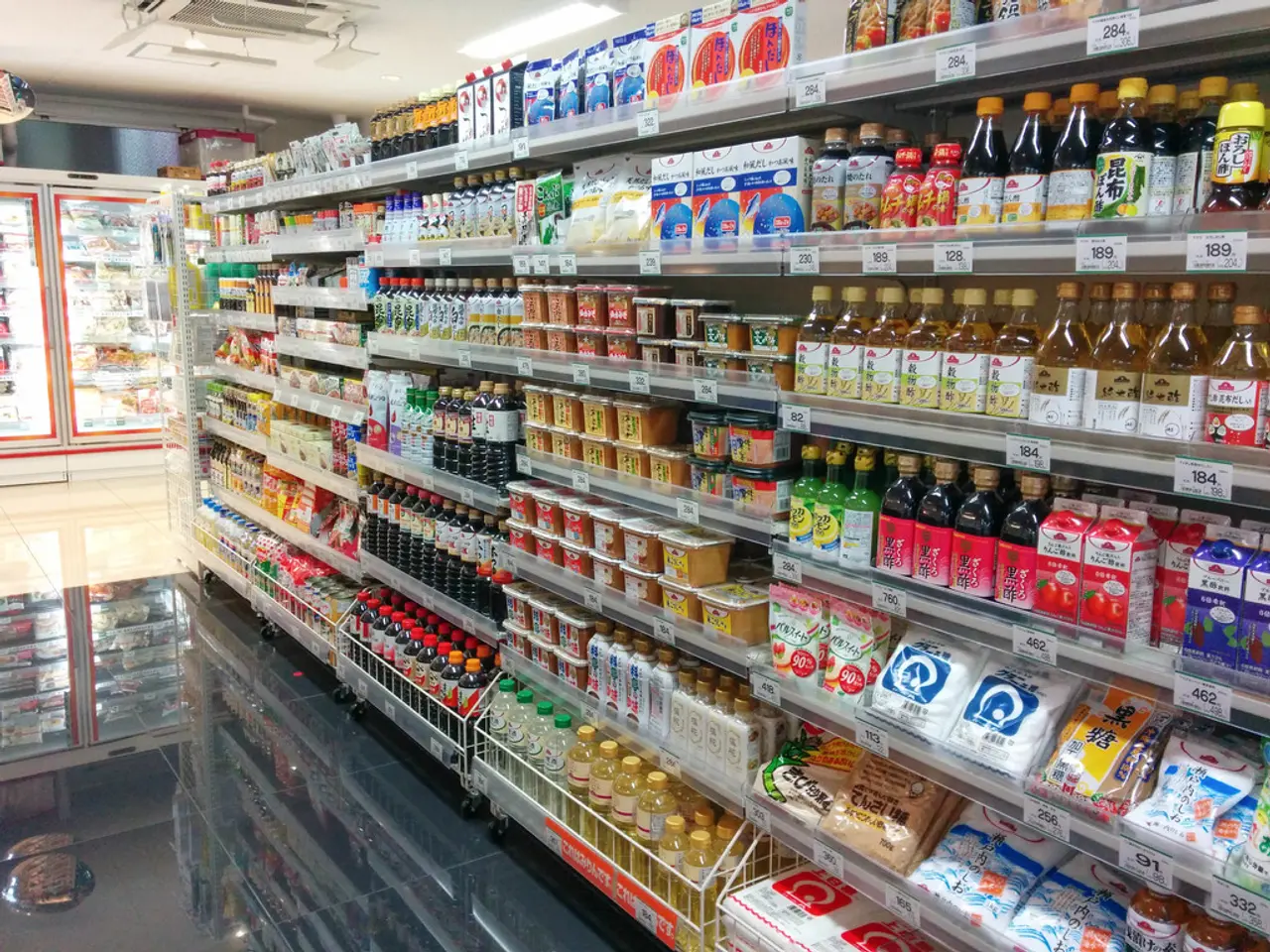
Cutting Grocery Costs: Strategies for Slashing Your Food Spend in 2023
Saving on Groceries Amidst Tariffs and Trade Wars
In these challenging times, managing your grocery budget can be a daunting task due to rising prices caused by factors such as the avian flu outbreak and tariffs. However, there are several strategies you can employ to keep your grocery expenses in check.
One effective approach is to make use of money-saving apps and digital coupons. Apps like Capital One Shopping and Fetch help find deals, compare prices, and earn rewards on purchases. Many stores also have their own apps, offering exclusive discounts and digital coupons.
Another strategy is to shop at discount or cheapest grocery chains. Stores like Target keep prices low by offering many store-brand products and economy pricing strategies. Target’s loyalty program, Target Circle, offers additional discounts and personalized deals through an app.
Buying store-brand versions of your favourite foods is another way to save. Store brands typically cost less than name brands but offer comparable quality, helping stretch your grocery budget, especially when tariffs raise prices on imported goods.
Signing up for store loyalty and rewards programs is also beneficial. These programs provide exclusive discounts, points redeemable for future savings, and personalized coupons. Combining them with credit cards that offer grocery rewards further maximizes savings.
In light of tariff impacts, focusing on domestically-produced goods may help avoid some tariffs and keep costs down. Comparing prices across multiple retailers using apps or websites can also help find the lowest prices. Careful planning of your shopping list can prevent impulse buys that can increase costs, especially in stores designed to tempt shoppers.
Using a rewards credit card designed for grocery or general purchases can also help save. Just remember to pay off balances monthly to avoid interest charges.
For a more sustainable and cost-effective way to buy fresh produce, consider signing up for a community-supported agriculture (CSA) program. Although it may cost a few hundred dollars, you'll receive a variety of fresh produce weekly or biweekly from the farm throughout the harvest season.
If you're looking for additional ways to save, apps like Flipp and Flashfood can help. Flipp allows users to view digital versions of weekly circulars from nearby supermarkets and add coupons to loyalty programs. Flashfood offers discounts of up to 50% on meat, produce, and other items nearing their sell-by dates at stores like Giant, Giant Eagle, and Meijer.
Lastly, Kiplinger has a list of top credit card picks for groceries and food, powered by Bankrate, which can help you make the most of your grocery spending.
By implementing these strategies, you can better manage your food budget during trade tensions and ensure you're getting the best value for your money.
References:
- https://www.usda.gov/media/blog/2020/08/11/usda-projected-record-high-food-prices-2024
- https://www.target.com/circle
- https://www.ibotta.com/
- https://www.supermarketguru.com/blog/2020/08/11/how-to-save-money-on-groceries-during-tariffs-and-trade-wars/
- https://www.albertsons.com/my-account/loyalty-program
- https://localhost/csa
- https://www.localharvest.org/
- https://www.bankrate.com/creditcards/
Incorporating diverse shopping strategies can help manage expenses effectively during tariff-induced price increases. For instance, signing up for loyalty programs like Target Circle provides additional discounts, and using apps such as Capital One Shopping and Fetch can help find deals on food-and-drink items. Furthermore, focusing on home-and-garden products, consider opting for store-brand equivalents as they offer savings without compromising on quality. Lastly, embracing a lifestyle change, like joining a community-supported agriculture (CSA) program, can provide fresh produce at a more sustainable cost.