Registered Fridolin for a Maternal Care Program - Calf Fridolin Discovers New Matriarch figure
In the fascinating world of animals, boundaries often blur as different species form bonds of care and affection. From the pastures of Germany to the avian sanctuaries, stories of inter-species adoption and care abound.
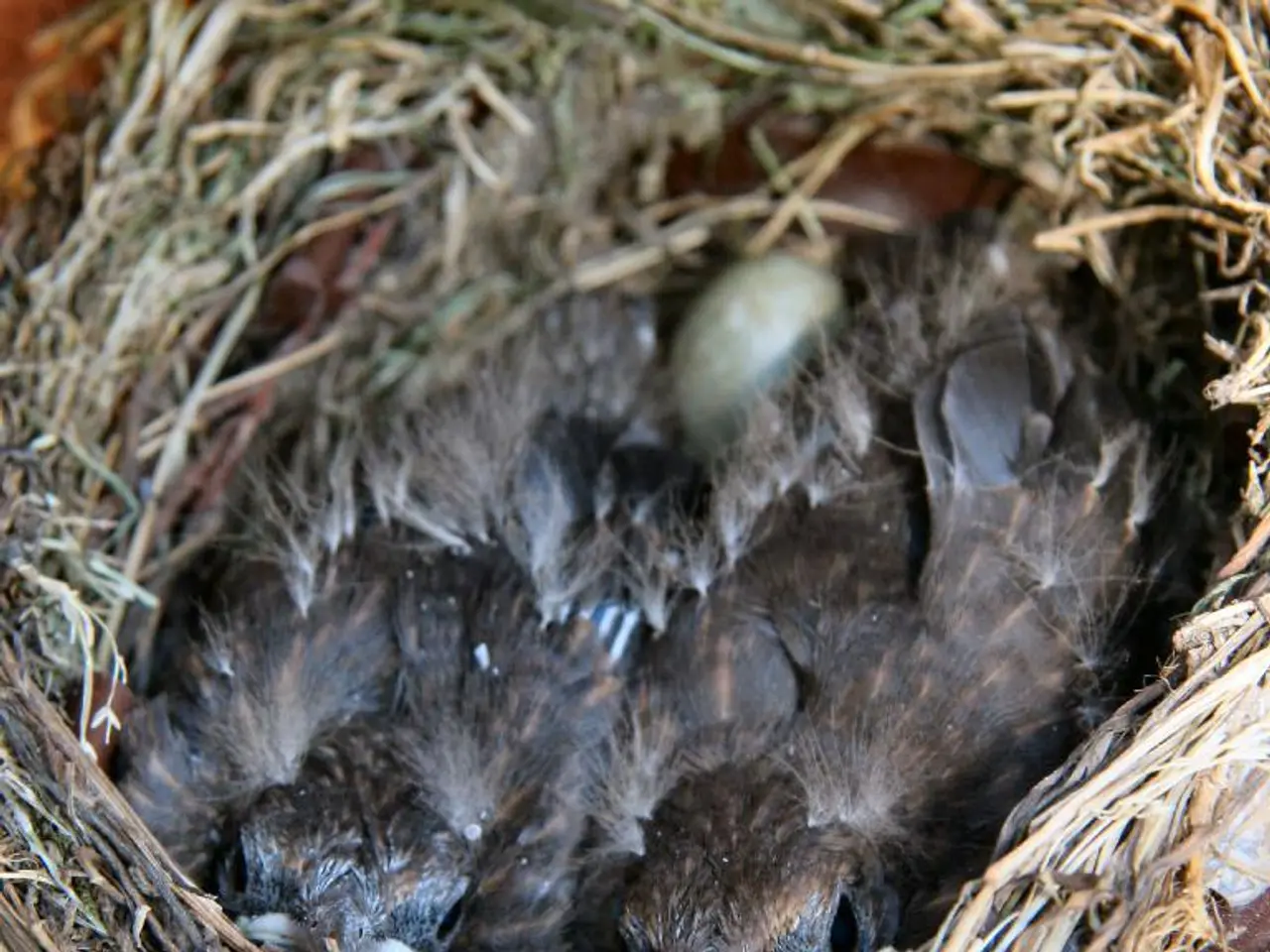
Last year, two parentless little eagle owls from Lower Bavaria found a loving home in an eagle owl pair from Upper Bavaria. The older owls took it upon themselves to teach the mini-eagle owls everything they needed to survive independently in nature. This heartwarming tale is a testament to the power of nurturing instincts and caregiving behaviour that transcends species boundaries.
Meanwhile, on a stormy spring night, a calf named Fridolin was born with crooked legs and was rejected by his mother. But fate had other plans. At just a few days old, Fridolin positioned himself under another cow's udder that had also just given birth, and was successfully adopted. Fridolin thrived under his new mother's care, and after a short time, he was able to run like any other calf.
The story of Fridolin's adoption is not unique. In the animal kingdom, it's common for mothers to care for foreign youngsters, even across different species. For instance, an orphaned offspring of a hit-and-run cat was placed with another cat mother who cared for the foreign kitten without hesitation.
The dachshund dame from Lower Saxony, who adopted a piglet a few years ago, is another example of this remarkable behaviour. The dachshund developed such strong maternal feelings for the piglet that she produced milk and nursed it.
The eagle owl hen from Greifvogelpark Saarburg, who hatched chicken eggs and cared for them, also demonstrates this behaviour. However, her case is unique as she was imprinted on humans, causing mating with a male eagle owl to not work, as suspected in the SWR report.
These acts of inter-species friendship or adoption are driven by a variety of factors. Nurturing instincts and caregiving behaviour are key, as many animals have strong caregiving drives that can be activated by infants or dependent individuals, even if they are from a different species. Social bonding and companionship needs also play a significant role, as animals raised closely together or in the same environment often develop social bonds regardless of species differences.
Empathy and emotional support are also crucial factors. Some animals show empathy, aiding injured or disabled companions, as with a blind Golden Retriever supported by cats who help him navigate life, reflecting emotional understanding beyond species barriers.
Protection and inclusion are also factors, with certain inter-species adoptions functioning socially, where the adopting group integrates the adopted individual protected as a member. Learned social behaviours and familiarity also contribute to these cross-species care and adoption behaviours.
Thus, a dachshund caring for a piglet reflects these broader behavioural patterns, driven by instinctual caregiving, social bonding, emotional connection, and the benefits of companionship, which sometimes override species distinctions.
These examples are widely documented, highlighting natural animal behaviours of inter-species empathy and adoption beyond mere curiosity or coincidence. This fascinating aspect of animal behaviour continues to captivate us, offering insights into the depths of animal emotions and social structures.
Within this captivating spectrum of animal behavior, a community policy might promote and celebrate these instances of inter-species empathy and adoption to foster awareness and understanding of these natural bonds. Meanwhile, individuals who dream of a lifestyle intertwined with home-and-garden life and pets could benefit from vocational training programs that focus on pet care and rehabilitation, given the increasing awareness of the interconnectedness of various species and the importance of empathy in raising pets.